The FruitGuys Community Fund is excited to share mid-year updates from our record-breaking class of twenty-one farm grantees across seventeen states. Earlier this spring, we awarded $90,000—the largest grant budget in our history—to support projects that make farms more economically and ecologically sustainable while boosting community health.
From water conservation and soil health to pollinator support, season extension, and heirloom crop preservation, these small but mighty farms are already putting their plans into action. Together, their projects will steward 247 acres of farmland and expand our impact to four new states: Florida, South Carolina, Idaho, and New Hampshire.
We’re thrilled to showcase their progress so far—the challenges, the wins, and the creative solutions—as these grantees bring their sustainability projects to life.
Mid-Year Project Updates
- Aspen Ridge Farms in Caldwell, Idaho
- Beacon Food Forest Gardens in Clearwater, Florida
- Blessed Up Blooms in Atlanta, Georgia
- Chelsea Community Garden in Chelsea, Massachusetts
- Common Vision – Prescott Farm in Oakland, California
- Dandelion Forest Farm in Nottingham, New Hampshire
- Diddly Squat Farming in Brandywine, Maryland
- Gardopia Gardens in San Antonio, Texas
- Liberation Farms in Wales, Maine
- Living Hope Farm in Harleysville, Pennsylvania
- Mother Carr’s Farm in Lynwood, Illinois
- Namuna Farm in Kent, Washington
- Old School Farm in Nashville, Tennessee
- Quetzalcoatl Temple in Arenas Valley, New Mexico
- The Farm at The Beth in Chattanooga, Tennessee
- The Laurels Farm in Sandown, New Hampshire
- The Refugee Collective Farm in Elgin, Texas
- Thimbleberry Collaborative Farm in Boring, Oregon
- Tidal Rhythm Organic Farm in Belle Haven, Virginia
- Ubuntu Family Farm in Kent, Washington
- Uhuru Farms in Hopkins, South Carolina
Aspen Ridge Farms
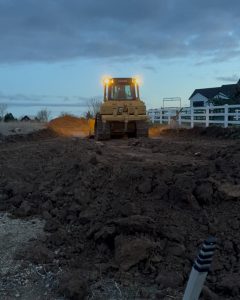
Aspen Ridge Farms in Caldwell, Idaho, received a $4,935 grant to build a 20′ x 60′ high tunnel, extending the growing season, regulating temperatures, and protecting heirloom crops from frost. The Urizar family’s seven-acre farm produces pastured eggs, chicken, pork, and a diverse array of fruits and vegetables using regenerative practices and no-till gardening. This project will boost yields, support biodiversity, and strengthen crop resilience while increasing the availability of fresh, local food for the community.
Significant progress has been made on the high tunnel project, with the team gaining hands-on experience in planning, preparing, and beginning construction. Although installation has taken longer than expected due to a busy summer season, the project remains on track. Once complete, the high tunnel will allow Aspen Ridge to produce more food year-round, enhance heirloom crop production, and continue fostering sustainable farming practices.
Beacon Food Forest Gardens
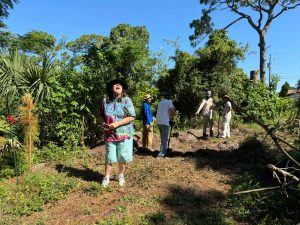
in Clearwater, Florida, received a $4,456 grant to revitalize a neglected area of the farm by planting thirty-two fruit trees, perennial companion plants, and pollinator-friendly annual crops. This effort supports biodiversity, food production, education, and regional food security through agroecological and permaculture practices.
So far, the team has planted sixteen of the twenty-two purchased trees, installed a hügelkultur gardening bed, prepared the perennial crop area, and added twenty new perennials. They’ve also started sowing seeds for fall plantings and hosted a biochar workshop. Approximately fifty people participated in the first two community workdays, and the farm is preparing to engage refugee populations through regular garden experiences. The project is on track, with additional plantings and pollinator border installation planned for later this fall.
Blessed Up Blooms

Blessed Up Blooms in Atlanta, Georgia, received a $4,975 grant to plant native Rabbiteye blueberry cultivars on its one-acre certified organic farm, expanding offerings beyond cut flowers while supporting ecological practices like minimum tillage, crop rotation, and cover crops.
So far, the farm has installed precision drip irrigation, tilled and cultivated the planting area, and sown the first two rounds of cover crops. Some of these crops, along with cash crops, have already supported floral arranging classes at the Atlanta Mission homeless shelter, engaging local community members. Despite a few unexpected truck repairs, the project remains on track and poised to expand both farm production and community impact.
Chelsea Community Garden

Chelsea Community Garden in Chelsea, Massachusetts, is a nonprofit farm producing culturally relevant fruits, vegetables, and herbs on .06 acres, and has served as a vital urban growing space and community hub since 1998. With a $5,000 grant, the gardeners will purchase fourteen raised-bed garden kits and forty-two yards of loam and compost, making the space more accessible, productive, and sustainable for years to come.
So far, the team has engaged over sixty community members and stakeholders to design the renovations, coordinated with the City of Chelsea on leveling the foundation, and prepared volunteer groups for fall construction. While the shortened growing season has created a tight timeline, the project is on track to begin renovations in October and is expected to directly engage an additional fifty community members during implementation.
Common Vision – Prescott Farm

Common Vision – Prescott Farm in Oakland, California teaches environmental education and models sustainable agriculture at Prescott Elementary School. The farm grows fruits and vegetables such as collards, squash, tomatoes, legumes, salad greens, berries, edible flowers, melons, and pumpkins. With a $5,000 grant, Prescott Farm is creating a “Regeneration Station” with a worm farm, chickens, and a hoop house for plant propagation and outdoor learning. These additions are designed to strengthen sustainable urban agriculture education while expanding access to fresh food for students and the wider community.
So far, the team has expanded garden spaces with pollinator-friendly perennials and completed construction of a new chicken coop, which will house the forthcoming Incubation Project led by 4th and 5th grade students. The farm also launched its worm box project, which has already benefited the full student body of 150 children and several hundred participants in weekend urban farming trainings. With 450 people directly impacted to date, the project is on track and poised to provide long-term educational and nutritional benefits.
Dandelion Forest Farm

Dandelion Forest Farm in Nottingham, New Hampshire, received a $4,971 grant to purchase a commercial leaf shredder, improving the farm’s ability to create nutrient-rich mulch from seasonal leaves. This investment supports the farm’s agroforestry and regenerative practices across its diverse vegetable and perennial tree and shrub plantings, helping to conserve water, regulate soil temperature, prevent erosion, and suppress weeds. The mulch also provides an educational opportunity for visitors to learn about sustainable resource management.
The project is fully underway, with the shredder purchased and in use. Shredded leaves have already been applied as mulch, improving water retention and plant growth during an unusually hot and dry summer. With these tools in place, the farm can continue efficiently preparing beds, protecting soil health, and teaching visitors about regenerative agriculture, benefiting an estimated seventy community members who engage with the farm throughout the growing season.
Diddly Squat Farming
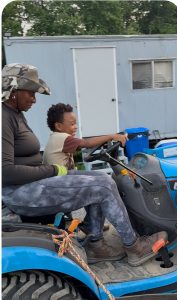
Diddly Squat Farming in Brandywine, Maryland, received a $3,221 grant to purchase a commercial dehydrator and screens, supporting value-added herbal product development and the production of biological pesticides. This investment will improve processing efficiency, strengthen pest management practices, and help maintain high standards for food safety and regulatory compliance.
The project has faced some challenges, as the timing of biological pesticide application was delayed due to weather and operational priorities. Despite this, the farm has procured key materials, completed site preparation, and trained staff in biological control methods. About twenty individuals, including youth workforce participants, volunteers, and farm staff, have been directly involved so far. The farm now plans to apply the biological controls this fall, ensuring that project goals will still be met by the end of the grant period.
Gardopia Gardens

Gardopia Gardens in San Antonio, Texas, received a $5,000 grant to expand its Community Resilience Tool Library, providing shared tools like compost tumblers, soil testers, and drip irrigation kits to support schools, community gardens, and urban farmers in underserved neighborhoods. These resources are already improving efficiency across projects and strengthening community programming.
A major milestone was Gardopia’s first-ever composter, designed and built with students from the University of Texas at San Antonio (UTSA) and Trinity University.
“Engaging UTSA and Trinity students in building our first-ever composter was a milestone—providing both critical infrastructure and hands-on experience.” –Dominic Dominguez, Chief Operating Officer, Gardopia Gardens
More than 500 people have benefited so far, and while coordinating tool use and training remains a challenge, the project is on track to meet its goals and expand its impact.
Liberation Farms

Liberation Farms, operated by the Somali Bantu Community Association in Wales, Maine, received a $4,965 grant to support soil fertility, pest control, water conservation, efficient harvesting, and pollinator habitat through purchases of landscape fabric, cover crop seeds, row covers, wheelbarrows, drip tape, trellising twine, harvest bins, and perennial herbs. These tools enhance farm productivity and sustainability across the cooperative’s fifty-acre growing area.
So far, thirty Somali Bantu farmers have utilized new drip irrigation, row covers, landscape fabric, and trellising for over 2,000 tomato plants. Cover crops and flowering perennials have been planted to build soil and support pollinators. Early pest pressure has decreased, and the farm has been beautified with pollinator-friendly plants. Challenges include managing long-term field practices, optimizing fabric placement, and cover crop germination in a dry summer. The project remains on track to strengthen productivity and community farming capacity.
Living Hope Farm

Living Hope Farm in Harleysville, Pennsylvania, received a $3,053 grant to establish a 200′ x 20′ edible perennial polyculture of fruit trees, berry bushes, and edible undergrowth. The project will act as a natural windbreak and pollinator habitat while benefiting more than 200 community-supported agriculture (CSA) families.
So far, the team has begun sourcing and planting trees and shrubs, secured a large wood chip donation, and extended their compost tunnel to boost production. Volunteer workdays are scheduled for the fall. While heavy summer rains stressed some of the first trees, all remain salvageable. About twenty-five volunteers will help with installation later this season, with CSA members seeing the benefits next year.
Mother Carr’s Farm

Mother Carr’s Farm in Lynwood, Illinois, received a $5,000 grant to install a drip irrigation system, including a larger water pump and filter, to improve water efficiency, reduce labor needs, and support soil health and crop productivity. The farm grows fruits and vegetables on three acres using sustainable methods and provides biweekly produce distribution, a paid internship program, and donations to local food pantries. The project directly impacts the farm’s CSA members, which number nearly fifty for the 2025 season, as well as over seventy-five community members who participated in a recent farm produce sale.
To date, the team has purchased irrigation equipment and kits in preparation for fall crops. Installation will be completed once the farm’s new greenhouse is operational, projected for mid-October. Once finished, the irrigation system will streamline production, conserve water, and strengthen Mother Carr’s capacity to grow fresh, healthy food while continuing to serve and educate the local community.
Namuna Farm
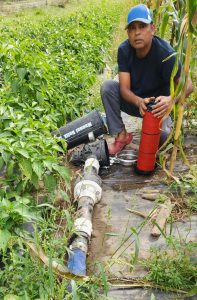
Namuna Farm in Kent, Washington, operated by the Biswa family through the IRC’s New Roots program, received a $5,000 grant to install a new drip irrigation system. The new system has been up and running since the end of June. This upgrade replaces half of the farm’s sprinkler system, improving water efficiency, reducing labor and fuel needs, and supporting healthier plants. The system has contributed to higher yields, improved produce quality, and fewer pest and disease issues, directly benefiting approximately 700 community members who rely on the farm’s culturally significant crops.
The farm faced some challenges in September when leaks appeared in the connectors, prompting the purchase of replacement parts with remaining grant funds. Despite this, the project remains on track, and Namuna Farm continues to strengthen sustainable food production and community impact.
Old School Farm

Old School Farm in Nashville, Tennessee, received a $5,000 grant to expand its growing space by adding a new half-acre plot protected with an electric fence. This infrastructure improvement increases food security for the farm’s CSA members and strengthens its capacity to provide weekly produce donations to local food pantries, benefiting an estimated 800 community members.
The project is underway, with $1,657.50 of the grant spent to date on materials and installation of the fencing system. Once completed, the expansion will boost production while protecting crops from wildlife, supporting the farm’s mission to serve its community with fresh, locally grown food.
Quetzalcoatl Temple

Quetzalcoatl Temple in Arenas Valley, New Mexico, received a $2,995 grant to construct a walipini—a sunken greenhouse that uses passive solar energy and earthen insulation—to provide stable year-round growing temperatures for its heirloom vegetables, medicinal plants, and Ayurvedic herbs. This structure will help extend the growing season in the region and serve as a model for local farms, demonstrating the benefits of passive solar agriculture in the arid Southwest.
The project is on track, with the team having chosen and prepared the building site and priced out materials. Once the monsoon rains subside, they plan to begin digging out the walipini. Completing this project will support Quetzalcoatl Temple’s mission of stewarding five acres of farmland as part of its ecovillage community while providing consistent access to culturally and ecologically significant crops for members and the broader community.
The Farm at The Beth

The Farm at The Beth, an urban farm program of United Methodist Neighborhood Centers in Chattanooga, Tennessee, received a $4,734 grant to expand its cut flower garden, plant perennial berry bushes, establish a honeybee hive, and enhance pollinator habitats. These investments support biodiversity, soil health, food production, and long-term farm sustainability while engaging the local community.
So far, the farm has installed drip irrigation, covered the hoop house with shade cloth, added compost, trellised tomatoes and vining plants, and created a cut flower garden. Despite heavy rains and extreme heat, these improvements have optimized growing space and bolstered farm resilience. Approximately 900 people have been directly impacted so far.
“The support from this grant has been invaluable in creating solutions, optimizing space, and setting us up for lasting sustainability.” – Lillian Moore, Director of Community Impact, The Farm at The Beth
The Laurels Farm
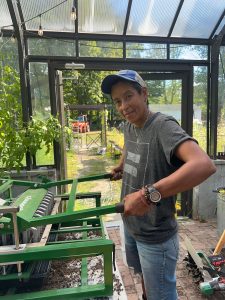
The Laurels Farm in Sandown, New Hampshire, received a $4,118 grant to upgrade propagation and bed-preparation tools, improving efficiency, seedling quality, and sustainability. The grant funded a seventy-two-cell soil blocker, a Jang Seeder Starter Kit with rollers, a Tilther XT with drill, and premium compost, enabling the two-person team to drastically increase productivity and reduce labor intensity.
Since receiving the grant, the farm has implemented these tools to accelerate tray production, prep beds more efficiently, and improve seedling success. These improvements directly impacted approximately 2,770 people this season, including farmers’ market and farm store customers, food pantry recipients, World Wide Opportunities on Organic Farms volunteers, and staff. By streamlining propagation and bed prep, The Laurels Farm has strengthened its capacity to grow high-quality, organic produce while maintaining sustainable practices and serving its community.
The Refugee Collective Farm
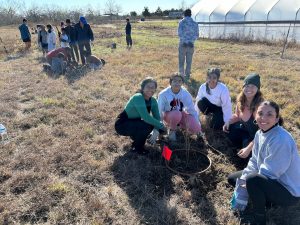
The Refugee Collective Farm in Elgin, Texas, received a $5,000 grant to install drip irrigation and establish an evergreen windbreak with Italian cypress, Ashe juniper, and smooth sumac trees. This project will protect crops, promote biodiversity, and expand access to culturally significant produce for the farm’s refugee community.
Because the planting season in Central Texas runs from November to February, the team has scheduled three planting events (November 22, December 6, and December 20) and begun outreach to nineteen refugee gardeners and their families. Corporate volunteer groups may also participate. Due to funding constraints, fewer trees will be planted this year, prioritizing keystone species, with plans to complete the full polyculture in future years. The project is on track to enhance farm resilience, community engagement, and biodiversity once plantings begin.
Thimbleberry Collaborative Farm
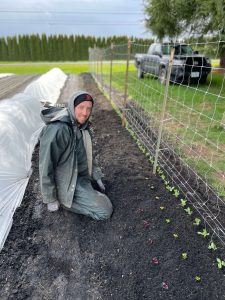
Thimbleberry Collaborative Farm in Boring, Oregon, received a $1,745 grant to install an underground water line to its propagation house, improving farm safety, water conservation, and seedling production while reducing freeze-related damage. This upgrade will enhance food production, lower maintenance costs, and increase the farm’s capacity to support the community.
The project has not yet begun, as installation is waiting on excavation of the driveway, which has been delayed by the county. The farm is in the final round of permitting and expects to start excavation soon. Once complete, this infrastructure will strengthen the farm’s regenerative operations, which include compost, low-till methods, and cover cropping, and will allow Thimbleberry to better serve its community with fresh, locally grown produce and educational programming.
Tidal Rhythm Organic Farm
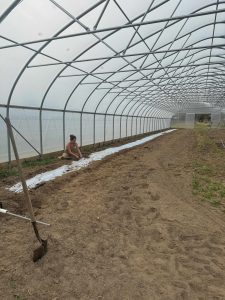
Tidal Rhythm Organic Farm in Belle Haven, Virginia, received a $4,726 grant to implement a rainwater catchment system and solar-powered irrigation system to reduce reliance on groundwater, conserve water, and enhance soil health. The farm’s regenerative practices across produce, perennials, and high tunnels support biodiversity and sustainable food production.
Due to a recent loss in the family, Tidal Rhythm has requested additional time to complete the project. We are extending the grant period to provide the farm the flexibility needed to continue its work without added pressure, ensuring that the team can implement the improvements thoughtfully and successfully while navigating this personal hardship.
Ubuntu Family Farm

Ubuntu Family Farm in Kent, Washington, received a $5,000 grant to install weed-suppression tarps, trellis materials for heirloom beans and peas, and a rainwater catchment and drip irrigation system.
So far, Ubuntu Family Farm has purchased seeds, plants, equipment, weed barriers, compost, and watering tools, helping to expand both production and community impact. These investments support direct consumers, local food banks, and hands-on learning for community members while promoting healthy, organic food practices. The project is on track to improve farm efficiency, soil management, and food security across the local community.
“These improvements will conserve water, protect soil health, and reduce labor, while expanding access to fresh, culturally significant produce for our community.”–Iya Kiauntae Washington Infinite, Director of Institutional Advancement, Ubuntu Family Farm
Uhuru Farms
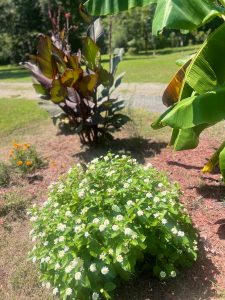
Uhuru Farms in Hopkins, South Carolina, received a $1,112 grant to establish a Pollinator Patio—a teaching and growing space that supports bees, butterflies, hummingbirds, and other pollinators while educating youth and community members about biodiversity. The project expands Uhuru’s role as one of the few biodiverse farms in a monoculture-heavy region, offering an outdoor classroom for daycare groups, senior citizens, and youth.
To date, new pollinator-attracting plants have been installed around the farm, drawing carpenter bees, honeybees, butterflies, hummingbirds, and moths. The increase in pollinators has boosted harvests and sparked joy among children chasing butterflies in the garden. Uhuru is also partnering with a local Master Beekeeper, who is training farm staff in hive care and pollinator stewardship. Despite early challenges with honeybee management, the project remains on track, enriching harvests and inspiring the next generation of growers.
Help Keep the Positive Momentum Going
You can help us support more innovative small farm projects by donating to our 2026 grant cycle.
Want to see how this year’s projects unfold? Subscribe to our newsletter for ongoing updates and to read the final reports from our 2025 grantees when they’re published!
Gratitude to Our Funders
The 2025 grants were made possible thanks to donors to our Give to Grow Small Farms campaign and continued program support from the Aramark Charitable Fund. Since 2022, Aramark has partnered with us to fund agricultural nonprofit farms working with underrepresented farmers and communities to expand access to sustainable farming resources and opportunities.
We also thank The FruitGuys, our founding partner, which covers all administrative and staffing costs so that 100% of outside donations go directly to small farm sustainability grants. The FruitGuys Community Fund is a nonprofit, fiscally-sponsored project of Community Initiatives.